Pages

Showing posts with label 9hur5. Show all posts

Wednesday, November 11, 2020

Electricity Circuits

Electricity Circuits

Parallel

A circuit in which the bulbs are divided up evenly 

Series

A circuit when the bulbs are in one continuous connection.

Wednesday, November 4, 2020

Electricity

Electricity 

Static Electricity

A build up of electrical charges on an object


Current Electricity

A flow of electric charge.


Electrical Charge

electrical particles that are negatively charge


Circuit

A system that provides a pathway for electrical current to flow through


cell

Supplies energy to circuit, by pushing current from the positive to negative end


voltmeter

A device used to measure voltage, or electrical potential energy difference


Static electricity

Current electricity

What is it caused by?

An imbalance of positive and negative charges,The movement of electrons through a wire.

Do the negative charges move?

YesNo

Does it power appliances?

No Yes


What are some examples of static electricity:

  • Walking on carpet
  • Lightning
  • Trampoline
  • Rubbing a balloon on your head

How does the Van der Graaff machine work?

It pulls electrons from the earth and moves them along a belt then stores it in a sphere.

What was one of the experiments we did with the machine?

People put both of their hands onto the top of the sphere and they're hair would go up.

Why does it do this?
The charges transfer to the persons body.


Tuesday, November 3, 2020

The Eye - Conclusion

 The Eye - Conclusion


 The Eye


Section 1: Label the diagram of the eye.


1. Sclera
2.  Iris
3. Pupil
4. Cornea
5. Retina
6. Lens
7. Optic Nerve


Section 2: Complete the optical illusions and write down how you think each optical illusion works.

  1. Young   

  2. Yes

  3.   The one with the smaller circles around it is bigger.

  4.    Nothing happened


Section 3: Find 10 interesting facts about the eye.


  1.    Your eye can focus on up to 50 objects at one time.

  2.   Eyes are made up of 2 million working parts

  3.   

  4.  

  5.  

  6.  

  7.  

  8.  

  9.  

  10.  

Section 4: Colour Blindness Eye test

  1. What are your colour blind test results? - Inconclusive

  2. What does this mean? - They can't find any issues with my eyes

  3. What is normal colour vision? -


Tuesday, October 20, 2020

Reflection and Refraction

Reflection and Refraction

Reflection - The bouncing back of a wave when it hits a surface through which it cannot pass.

Refraction - The bending of a wave as it passes at an angle from one medium to another

Incident ray - incoming ray

Reflected ray - the light that has bent as it enters a new medium

Normal Line - imaginary line drawn perpendicular to the surface of a mirror or any surface

Angle - The amount of bending that a light ray experiences

Law of Reflection

The law of reflection states that when a ray of light reflects off a surface, the angle of incidence is equal to the angle of reflection.

Wednesday, October 14, 2020

Speed of Light

Speed of Light


Aim: To investigate how light behaves when it hits a plane (flat mirror)

Equipment: Light box, Transformer, mirror and paper protractor / plastic protractor.

Method: 

1. Collect a ray box, power supply, and single slit ray slide from your teacher, and set them up to produce a single beam of light.

2. Place a plane mirror on the diagram of the protractor as described.

3. Vary the angle of incidence and record the angle of reflection in the results table.

Results: 

Angle of Incidence

Angle of Reflection

0°

0°

10°

10°

20°

20°

30°

30°

40°

40°

50°

50°

60°

60°

70°

70°

80°

80°


Tuesday, October 13, 2020

Light Experiment

Light Experiment


Opaque -  Solid
Translucent - Foggy
Transparent - Clear


Tuesday, September 8, 2020

Energy

Energy

Definition: Stored in an object, the ability to move something.


Different kinds of energy: 
Light energy, the energy of electromagnetic waves. 
Examples, microwaves, x-rays, visible light and colors.

Heat energy, caused by the movement of particles. 
Found in all hot objects, fuels such as gasoline and a hot cup of steaming cocoa. 

Sound energy, energy produced by vibrating objects. 
Examples are speech, ultrasound,  and music.

Chemical potential energy, stored in the bonds between particles. Found in substances like petrol and food.

Electrical energy, the movement of electrically charge particles. Found in wires, generators and lighting.

Gravitational potential energy, stored in objects due to their height above the ground. 
Examples are the force that holds the gases in the sun, the force that causes a rock to roll down a hill.

Kinetic energy, caused by the motion of an object. 
Eg. Moving, cars, running, swimming.

Elastic Potential energy, stored in stretched or squashed objects. Examples are springs and rubber bands.


Wednesday, September 2, 2020

Science Materials

Asil Glass Conical Funnel, For Chemical Laboratory, Rs 33 /piece | ID:  15595538930
Funnel
Lab-Crest - Lab-Crest Glass Stirring Rod 1/4" x 9-7/8" - 200 pk - John  Morris
Stirring Rod
 
Photographers' Formulary Glass Beaker - 600ml 09-0095 B&H Photo
Beaker 
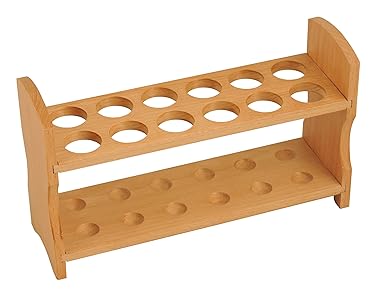
Wooden Test Tube Rack - Accommodates 12 Tubes, up to 28mm - 10.25" Wide -  Premium Polished Beech Wood Construction - Eisco Labs: Science Lab Tube  Racks: Amazon.com: Industrial & Scientific
Test Tube Rack

Measuring Cylinders - DutchChems
Measuring Cylinder 
Disposable Polyethylene Transfer Pipets – IVF Store
Pipet

Economy Grade Test Tube With Rim 150x18mm, Box of 25 | OfficeMax NZ
Test Tube
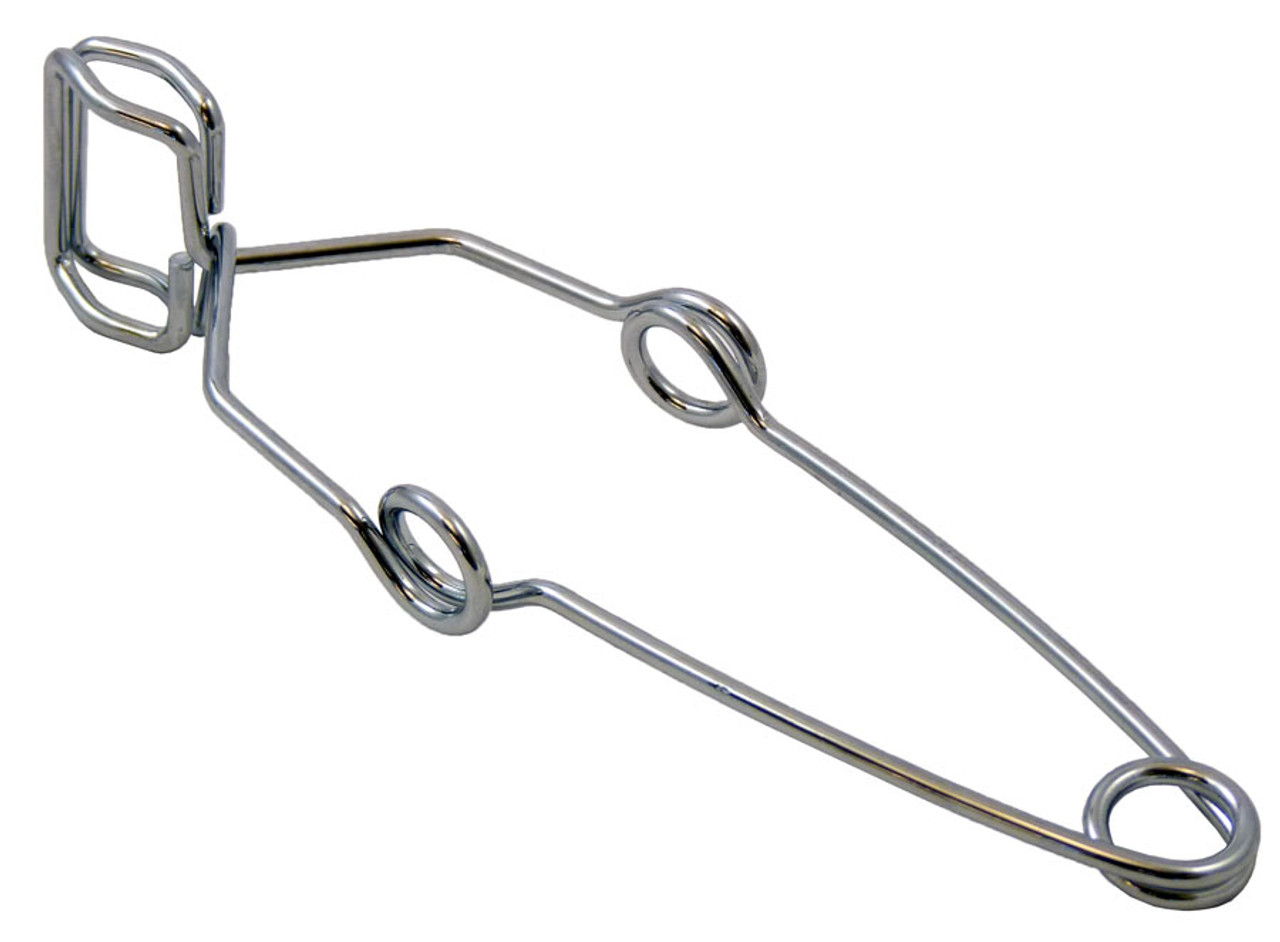
Test Tube Clamp / Tongs
Test Tube Tongs
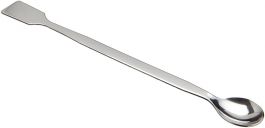
Stainless Steel Spatula/Spoon, 120mm | Mad About Science
Spatula

Bunsen Burner

Aim: To correctly light a Bunsen burner.

Equipment: Bunsen burner, heatproof mat, matches.

Method:
1. Place the heatproof mat on your workbench
2. Connect the Bunsen burner to the gas outlet
3. Turn the collar so that the air hole is closed
4. Light a match and hold it 2-3 cm  above the nozzle of the Bunsen Burner.
5. Turn the gas on at the top.

The color of the flame was a bright orange.
It didn't produce any noise.
It produced a little bit of smoke.

The flame was a light blue.
It didn't produce any noise.
It didn't produce any smoke.
The orange flame is much more visible than the blue flame.
It is safer left alone when closed because then its much more noticeable so people will be cautious around it.